
Trusted hybrid inverters, premium solar panels, and complete net metering support — designed around how Pakistan actually consumes power. Cut your monthly electricity bill by up to 80%, stay running through load shedding, and earn from extra units you send back to the grid.
We approach solar the way it should be approached in Pakistan — with honesty about what works and what doesn't. Many companies push a one-size-fits-all 5kW system regardless of your bill, your roof, or your DISCO. We don't. Every quote we send is built around your actual electricity consumption pattern, your roof's orientation and shading, your backup needs during load shedding hours, and your DISCO's specific net metering requirements.
The difference shows up in your second-year bill, when other systems start under-performing and ours keeps delivering. We supply products from manufacturers we've worked with across hundreds of installations — not just the brands with the biggest marketing budgets. Huawei FusionSolar inverters for homes that want smart monitoring and grid-quality output. Inverex for buyers who need reliable performance at a sensible price. Deye and Goodwe for high-capacity hybrid setups handling air conditioning and motor loads. JA Solar, Jinko, and Canadian Solar panels covering everything from value tier to premium bifacial options.
Original Huawei, Inverex, Deye, Goodwe, JA Solar, Jinko, and Canadian Solar with full manufacturer warranty papers handed to you. No grey-market panels, no relabelled inverters.
Battery-ready hybrid setups that switch seamlessly between grid, solar, and battery power. Start grid-tied today and add lithium storage later without replacing the inverter.
Complete paperwork handling for LESCO, IESCO, K-Electric, FESCO, GEPCO, HESCO, and other DISCOs — from documentation to commissioning, with regular status updates.
Our installation process is straightforward. After a site visit and load assessment, you receive a written quote with three clear tiers — economical, balanced, and premium — so you can see exactly what each option includes and what it costs. There are no hidden charges that appear after the contract is signed, and we don't change pricing once a quote is committed.
What sets us apart isn't a slogan — it's the years of field experience our installation team brings to your rooftop. Solar systems in Pakistan deal with conditions most international standards don't account for: extreme summer heat that drops panel efficiency, voltage fluctuations that damage cheap inverters, and DISCO timelines that vary widely between regions. Our team knows how to design around all of it.
Wondering whether solar makes financial sense for your home or business? Our calculator gives you a realistic picture based on your monthly bill, your city's average sun hours, current per-watt pricing in Pakistan, and your DISCO's net metering rate. You'll see an estimated system size, total upfront cost, expected monthly savings, and the time it takes to break even. Most residential systems in Pakistan now pay back in 3 to 4 years, after which the savings continue for another 20+ years.
Calculate Your Solar SavingsEvery brand we offer has earned its place through performance, not marketing. We've installed systems with all of them across different cities, climates, and load profiles — so when we recommend a product, it's based on how it actually performed for our customers in Pakistan, not how it tests in a lab in Germany or China.
Smart monitoring, premium grid quality
Local service network, reliable everyday choice
Strong real-world output, low degradation
Tier-1 performance, widely available in Pakistan
Solid warranty terms, mid-to-premium tier
Popular hybrid choice for high-load homes
Austrian-engineered, long service life
Strong value-to-feature ratio for hybrid use
Why this brand mix matters: a Huawei inverter paired with low-tier panels won't perform like the brochure promises. A top-tier JA Solar panel feeding into a budget inverter will lose efficiency in summer when the inverter overheats and curtails output. We pair components based on what works together, not based on what's in stock or what offers us the highest margin.
Each brand carries its own warranty terms — typically 10 years for inverters and 25 years for panel output. We hold copies of every warranty document and assist with claims on your behalf. If a panel fails after 8 years, you don't need to chase the manufacturer from Karachi to China. That's our job, and it's included in the package without extra fees.
If you have a brand preference based on your research or what your neighbour installed, mention it during your quote request. We'll let you know honestly whether that brand fits your specific situation, or whether a different option would serve you better at the same price. Honesty is cheaper than dealing with a mismatched system three years from now.
View All BrandsNet metering changes the math of solar in Pakistan. Instead of just offsetting your daytime consumption, you become a small power producer — exporting excess units to the grid and getting credited at your DISCO's buyback rate. Over a full year, a well-sized system can bring your bill close to zero, and sometimes into negative territory during peak production months.
But the application process is where most homeowners hit walls. Documentation requirements differ between LESCO and IESCO. K-Electric runs its own portal with separate workflows. FESCO charges different application fees. HESCO timelines stretch unpredictably. Without someone who knows each DISCO's specific quirks, approval can take months longer than it should.
We handle the entire net metering process from start to finish. That includes technical drawings (single-line diagrams, site layout, equipment specifications), application paperwork (CNIC, electricity bill, ownership or lease proof, NOC where required), DISCO-specific fee submissions, follow-ups, and being present at the site inspection. You stay informed at each stage without having to camp at your local DISCO office.
Lahore Electric Supply Company applications handled end-to-end. Site survey, drawings, NEPRA license filing, and bi-directional meter installation coordination for residential and commercial buyers across LESCO areas.
Learn MoreIslamabad Electric Supply Company net metering from Islamabad to Rawalpindi and the surrounding areas. We track current IESCO processing timelines and prepare documents to match their latest checklist.
Learn MoreK-Electric runs Karachi's grid under different rules from the rest of Pakistan. Our team has processed dozens of K-Electric applications and knows the portal, fee structure, and meter installation cycle in detail.
Learn MoreFaisalabad Electric Supply Company applications for Faisalabad, Jhang, Sargodha, and surrounding regions. We coordinate directly with local FESCO offices to keep applications moving.
Learn MoreGujranwala Electric Power Company applications across Gujranwala, Sialkot, Gujrat, and nearby districts. Complete handling from initial filing to bi-directional meter commissioning.
Learn MoreHyderabad Electric Supply Company net metering for customers in Hyderabad and the broader Sindh service area. Application support including the technical and regulatory paperwork.
Learn MorePakistan's net metering regulations have evolved several times in recent years, with rate adjustments and policy revisions affecting payback calculations. We stay current on these changes through industry channels and regulatory updates, so the quote you receive reflects current rates, not last year's assumptions about buyback pricing.
Our team has processed net metering applications across all major DISCOs and dozens of cities — from major centres like Lahore and Karachi to smaller towns where the local office may handle only a few solar applications per month. That breadth of experience is what makes the process predictable for you and removes most of the typical waiting and confusion.
Solar is one of the largest single purchases most homeowners make. The process should be transparent at every step — not a black box where you sign a contract and wait six weeks for surprises. Here's exactly how a project moves through our pipeline.
Share your monthly bill, address, and rough timeline. We send a technician for an on-site visit across major cities at no cost to measure usable roof area and check structural condition.
You receive three system options — economical, balanced, premium — with each one detailing panels, inverter, mounting, cables, protections, installation labour, and net metering fees separately.
Once you finalise the system, we start the DISCO paperwork while equipment is being procured. Sequential processing wastes weeks; parallel processing saves them.
Most residential installations finish within two or three days. Mounting, panel placement, wiring, inverter setup, and safety testing. Your home loses power only briefly during the final tie-in.
After your DISCO approves, the bi-directional meter is installed at your premises. We then commission the system, sync the monitoring app to your phone, and walk you through reading your generation data.
We don't disappear after handover. First-year support includes monitoring alerts when output drops, annual panel cleaning, and warranty claim handling on your behalf with all brand partners.
From your first call to a working system feeding the grid, typical timelines are 6 to 10 weeks. Most of that variability comes from DISCO processing speed in your area — the parts we control, like quote turnaround and installation, are deliberately fast. We tell you the realistic timeline upfront based on which DISCO you're under, not a marketing-friendly version that breaks down later.
Our blog covers the practical questions Pakistani solar buyers actually ask — current per-watt pricing, hybrid inverter comparisons specific to local brands, real net metering processing timelines, and the impact of recent policy changes on your payback period. Content is updated regularly so the information matches the market you're shopping in today, not what was true last year.
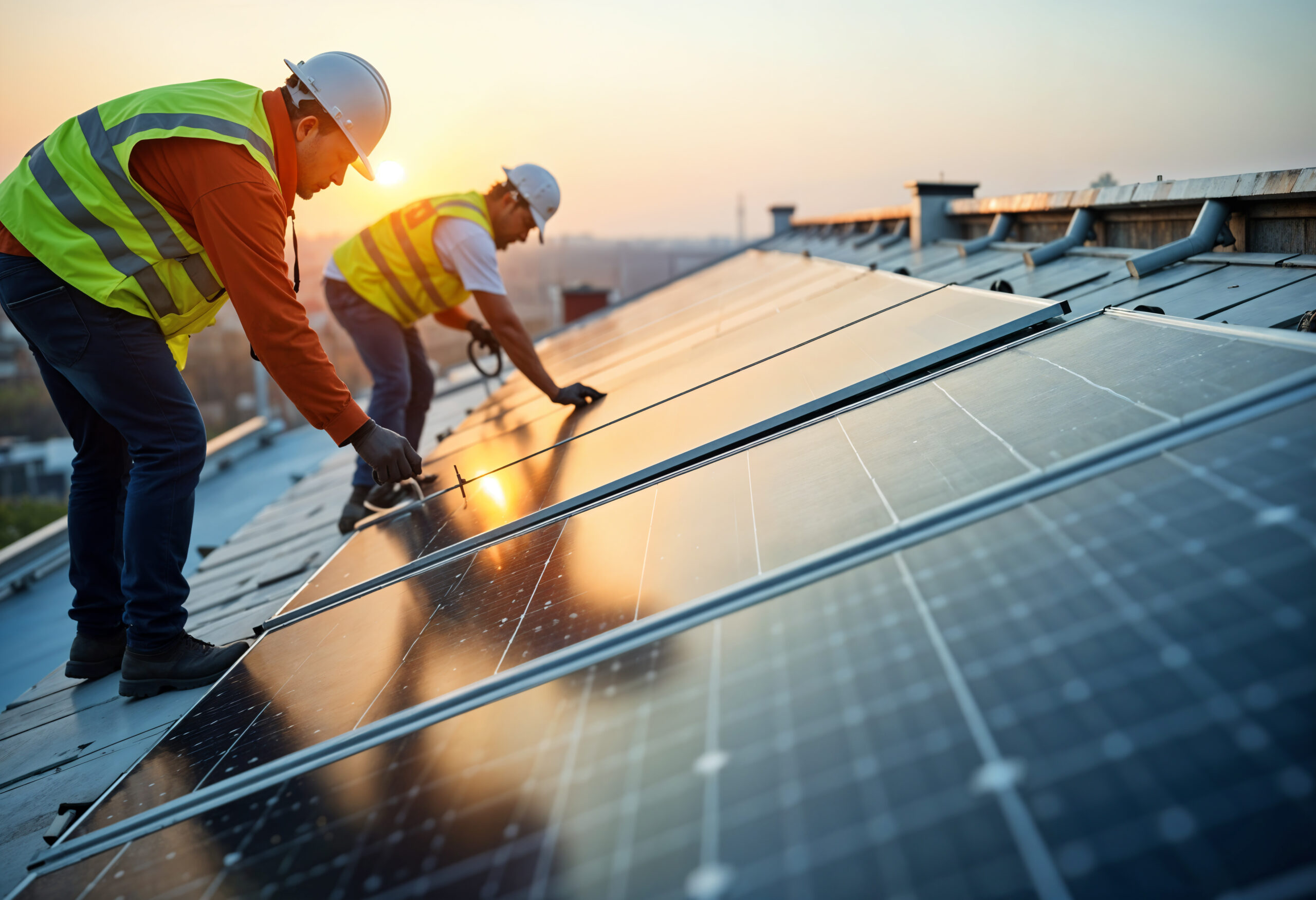
A practical comparison of the top hybrid inverters available in Pakistan right now — features, efficiency in summer conditions, pricing tiers, and which ones make sense for which household size.
Read More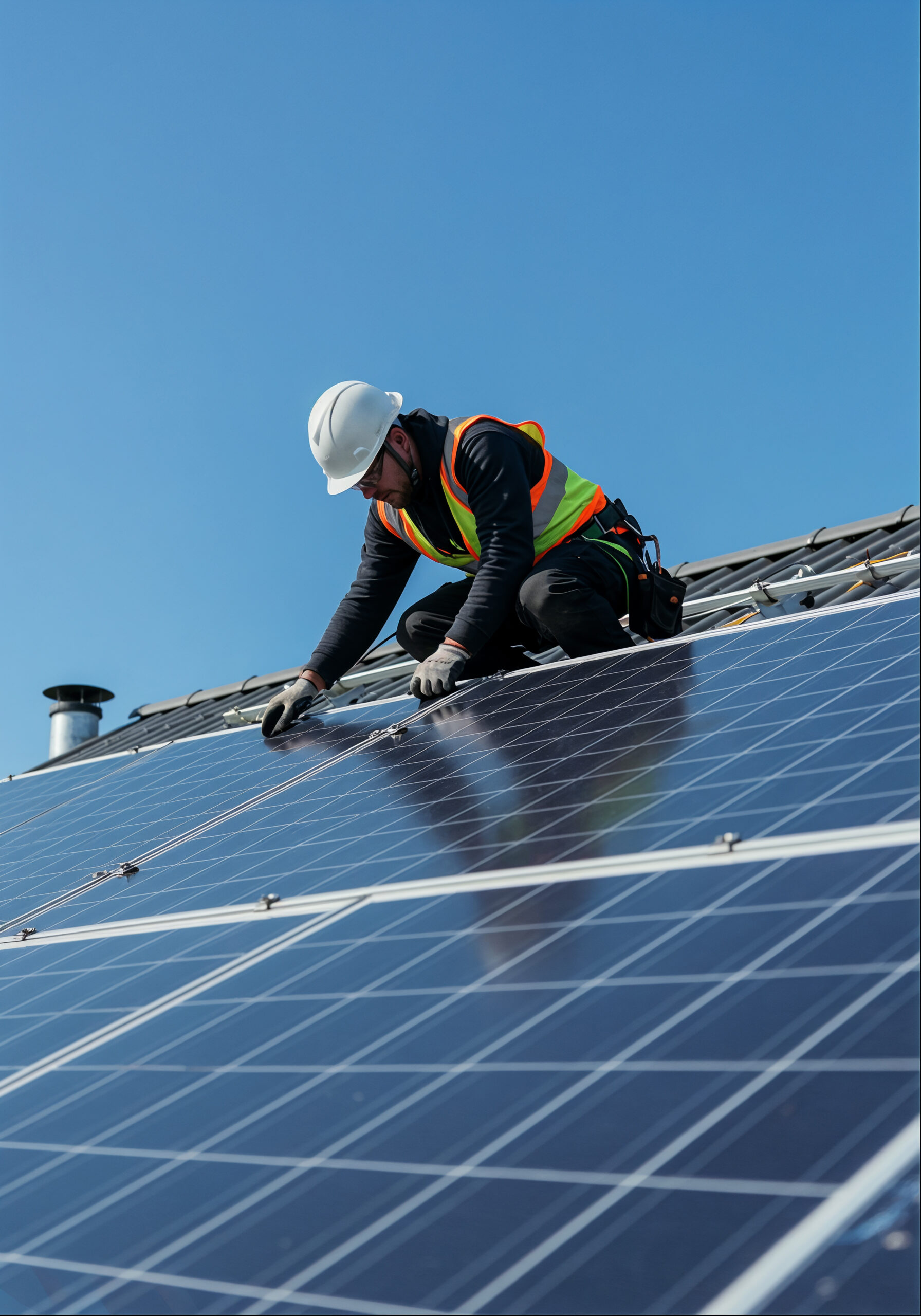
Current per-watt solar pricing across panel tiers, with the dollar-rupee variations factored in. Updated market insights for buyers planning their solar investment this quarter.
Read More
What net metering actually costs in 2026, real DISCO-wise processing timelines based on recent applications, and the documents you should prepare before applying.
Read MoreA standard grid-tied solar system saves you money during sunlight hours, but it switches off the moment the grid goes down. That's where battery storage changes the picture. Adding batteries to your hybrid inverter means your home keeps running through load shedding, voltage drops, and unscheduled outages — silently, without a generator's noise and fuel costs.
Long cycle life (4000+ cycles), deep discharge capability, and built-in battery management. The right choice for daily cycling and high-demand backup including air conditioning loads.
Lower upfront cost and proven technology. A reasonable choice for fans, lights, refrigerator backup, and households with modest evening load profiles.
Start small, expand later. Hybrid inverters from Deye, Goodwe, and Huawei support modular battery additions without replacing the inverter — your wallet decides the pace.
The right battery choice depends on what you want to back up. Just fans, lights, and a refrigerator? A modest AGM bank covers that affordably. Air conditioning during night-time load shedding in Lahore summers? You're looking at lithium for the capacity and depth of discharge that AGMs can't match without doubling the bank size. Whole-home backup including motors and water pumps? That's a custom calculation involving inrush current handling and runtime expectations.
We don't push the most expensive battery option by default. Many of our customers start with a smaller bank covering critical loads and expand later as their budget allows or their needs grow. That's exactly what modular hybrid inverters are designed for, and it's the financially smarter way to enter battery storage.
Explore Battery SolutionsAs of 2026, a complete 10kW hybrid solar system in Pakistan typically ranges from PKR 1.2 million to 1.8 million depending on brand selection, mounting type (ground vs roof), and whether battery storage is included. Premium setups with Tier-1 panels and Huawei or Deye inverters fall in the upper range. Value-tier builds using Inverex inverters and standard panels land at the lower end. Pricing includes installation, basic protections, and net metering paperwork in most of our quotes. Call 0315-4616192 for an exact figure based on your roof and consumption.
Real timelines vary by DISCO and current backlog. LESCO and IESCO typically process applications within 4 to 8 weeks. K-Electric averages 6 to 10 weeks. FESCO, GEPCO, and HESCO range from 4 to 12 weeks. The biggest delays usually come from incomplete documentation or scheduling the DISCO site inspection. With properly prepared paperwork, expect 4 to 8 weeks across most major distribution companies in 2026 — we've processed enough of these to know what each DISCO is currently running.
An on-grid inverter is cheaper upfront but switches off completely during load shedding, even when the sun is shining bright. A hybrid inverter costs roughly 20 to 30 percent more but keeps your home powered during outages by routing solar energy through batteries, or directly to essential loads even without batteries on supported models. For most Pakistani homes that face regular load shedding, the hybrid option pays for itself in usability alone — separate from the financial return. We almost always recommend hybrid for residential setups in Pakistan.
Yes, even with the adjusted buyback rates, solar remains one of the strongest financial returns available in Pakistan. The economics shifted slightly compared to two years ago, but residential payback for a typical 5 to 10kW system still lands in the 3 to 5 year range. After payback, you continue saving for another 20+ years on equipment that needs minimal maintenance. With electricity tariffs rising annually, the math has actually improved for self-consumption-focused systems even when buyback rates dropped.
On a standard grid-tied system, no — it shuts off for safety reasons (anti-islanding protection). However, modern hybrid inverters include a feature called "Backup AC Output" or "EPS" (Emergency Power Supply) that lets you run essential loads directly from solar production during outages, even without batteries installed. Output depends on real-time sunlight, but it's enough to run lights, fans, and a refrigerator on most sunny days. Models from Deye, Goodwe, and Huawei all support this feature.
A 10kW system requires roughly 650 to 750 square feet of unshaded roof area when using current 580W panels (today's Pakistan market standard). This assumes panels installed flat or at a slight south-facing tilt. If your roof has obstructions, water tanks, satellite dishes, or shading from neighbouring buildings, the usable area calculation gets more specific — that's part of our free site assessment. Smaller systems naturally need less space (a 5kW system fits in roughly 350 square feet).
Solar panels come with a 25-year linear performance warranty (guaranteeing 80%+ output at year 25) and a 10 to 12 year product warranty (covering manufacturing defects). Hybrid inverters carry warranties between 5 and 10 years depending on brand — Huawei, Deye, and Goodwe offer the longest standard terms. We handle warranty claims on your behalf throughout the warranty period, so you never need to coordinate directly with the manufacturer or freight broken equipment internationally.
Yes, most hybrid inverters support phased expansion. The key is choosing an inverter with extra MPPT input capacity at installation time, so you can add panels to unused inputs later without replacing the inverter. Battery expansion is even more straightforward with brands like Deye and Pylontech that support modular stacking. We always plan for likely expansion at the quote stage, so you avoid expensive forced upgrades two years from now when your usage grows.
Solar systems need surprisingly little maintenance in Pakistan's climate. Panels typically need cleaning 3 to 5 times per year depending on dust levels in your area — Lahore, Multan, and the southern Punjab plains need more frequent cleaning than hilly areas. Inverters generally don't need maintenance beyond ensuring they're not blocked from ventilation. We offer an annual maintenance package covering panel cleaning, inverter health check, connection inspection, and monitoring data review.
For AC loads, you want a hybrid inverter rated at least 30 to 40 percent above your continuous AC current draw to handle compressor inrush spikes safely. Practically, that means a Deye 8kW or 12kW hybrid for a typical 1.5-ton inverter AC running alongside other home loads. Inverter ACs are kinder to solar systems than non-inverter ACs because they ramp up gradually. Pair them with a system sized for your roof and consumption pattern rather than just by AC tonnage.
Send us your details and we'll get back to you within one working day with a clear written quote based on your actual situation. No automated emails, no aggressive sales calls — just an honest assessment from someone who'll be designing your real system.
Prefer to talk directly? Call or WhatsApp our team at 0315-4616192. We're available 9 AM to 8 PM, Monday through Saturday. WhatsApp messages outside these hours get a reply by the next morning.